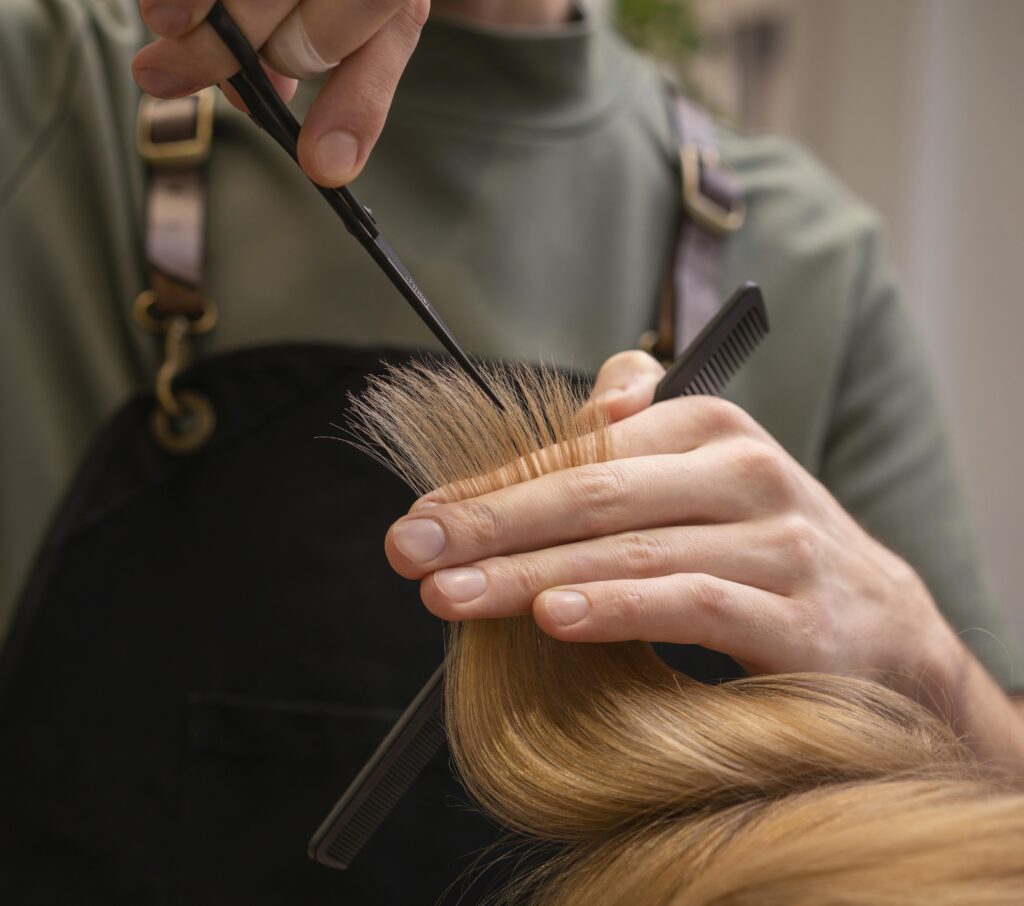
Your hands are your tools. Protect the income they earn.
You insure your equipment and take care of your scissors and clippers. But have you thought about protecting the person who uses them?
As a self-employed hairdresser or barber, your income often depends on being able to work with your hands. A broken finger, damaged wrist or illness could mean cancelled appointments and lost earnings while your mortgage, rent and household bills keep arriving.
Whether you rent a chair, run a salon or work as a mobile hairdresser, income protection could help you manage financially if illness or injury stops you working.
What is income protection?
Income protection insurance can replace part of your earnings through regular payments if you cannot work because of illness or injury, subject to the policy’s terms.
Payments start after an agreed waiting period and continue while you meet the claim conditions, up to the policy’s limits.
The money could help towards everyday living costs, including:
- Mortgage or rent payments.
- Food and household bills.
- Utilities and other essential commitments.
Think about your own situation: if you couldn’t work for two months, how would you cover those costs?
Why is income protection important for hairdressers and barbers?
Your work relies on precision, movement and spending much of the day on your feet. An injury that someone in another occupation could work around might prevent you from cutting, colouring or styling safely.
For example, a broken hand could make it difficult to grip scissors, use clippers or manage a blow-dry. Back or shoulder problems could also make a full day of appointments impossible.
When you’re self-employed, taking time off usually means losing the earnings from those appointments. Savings can help, but using them may leave less money available for tax, emergencies or other commitments.
Income protection can provide a financial cushion, giving you breathing space to focus on recovery.
What about Statutory Sick Pay (SSP)?
Eligible employees can receive SSP of up to £123.25 per week, or 80% of their average weekly earnings if lower, for up to 28 weeks. SSP is payable from the first full day of sickness absence under the rules introduced in April 2026.
If you’re genuinely self-employed, you cannot claim Statutory Sick Pay simply because you pay National Insurance. You may qualify for state support such as New Style Employment and Support Allowance, depending on your National Insurance record and circumstances, but this should not be assumed to replace your normal earnings.
If you work through your own limited company and are also an employee, your position may differ.
Could income protection cover a broken hand or finger?
Potentially. Depending on the policy and your circumstances, cover could apply to:
- Broken hands, wrists or fingers.
- Back and shoulder injuries.
- Illnesses requiring time away from work.
- Mental health conditions.
However, a diagnosis or injury does not automatically mean a claim will be paid. The insurer will assess whether you meet the policy’s definition of being unable to work, alongside medical evidence, exclusions and other conditions.
Why “own occupation” cover matters
An “own occupation” definition assesses whether illness or injury prevents you from carrying out your usual occupation, as defined in the policy.
This is particularly relevant when your job depends on practical skills. Being able to answer the phone or use a computer does not necessarily mean you can carry out your normal hairdressing or barbering duties.
Other policies may assess whether you could do a different suitable job, or any job. Understanding that difference is an important part of choosing cover.
How do you choose the right income protection?
The right policy should reflect your earnings, essential spending, savings and budget. Four decisions are particularly important.
- When should payments start?
The waiting period, also called the deferred period, is the time before benefits become payable.
A longer waiting period may reduce the premium, but you will need another way to cover your expenses in the meantime.
For example, if you choose an eight-week waiting period and recover within six weeks, you would generally receive no regular income protection payment for that absence.
- How long should payments continue?
Some policies limit each claim to a set period, such as one or two years. Others can continue for longer, subject to the policy conditions and end date.
A shorter claim duration may cost less, but could leave a gap if you remain unable to work after payments stop.
- How much income do you need to protect?
Start with your essential monthly household expenses and consider any other income or support available.
Insurers limit how much of your earnings you can insure. For self-employed applicants, they may assess profits or other eligible earnings rather than total business turnover, and may ask for financial evidence.
- What monthly premium can you comfortably afford?
Cover needs to be sustainable. Comparing benefit levels, waiting periods and claim durations can help you find an appropriate balance between cost and protection.
How much does income protection cost for a hairdresser or barber?
There is no single starting price that applies to everyone.
Your premium depends on factors including your age, health, smoking status, occupation and the cover you choose.
You may be able to start by protecting an amount that helps cover your essential household bills. However, a lower price can also mean a longer wait before payments start or a shorter maximum claim period.
The most useful question is: “What would suitable cover cost for me?”
At Oak Mortgages, we can help you explore the options, explain the differences and obtain a personalised income protection quote.
Does personal income protection cover salon costs or chair rental?
Do not assume it does.
Personal income protection is designed to replace part of your personal earnings. It should not be relied upon as dedicated cover for business overheads such as chair rental, salon rent, staff wages or equipment finance.
If those costs would continue while you were unable to work, discuss them separately when reviewing your protection needs.
Protect your income as well as your tools
You have worked hard to build your skills, reputation and client base. Considering income protection is one way to help protect the living those skills provide.
Want to know what income protection could cost you?
Contact Oak Mortgages or send me a message. We’ll help you understand your options and obtain a personalised quote based on your circumstances.
Important information: Income protection replaces only part of your earnings. Cover is subject to eligibility, underwriting and policy terms. Waiting periods, exclusions, benefit limits and maximum claim durations apply. Pre-existing conditions may be excluded. It generally does not cover fewer bookings, unemployment or a business downturn. Claims depend on medical and, where required, financial evidence. Answer application questions fully and accurately and keep premiums up to date to maintain cover. This article provides general information, not a personal recommendation. SSP information is correct for the 2026/27 tax year.


